Rust farmer JTeles turned 126,000 cloth into a 20,000,000 cloth wipe goal in seven days
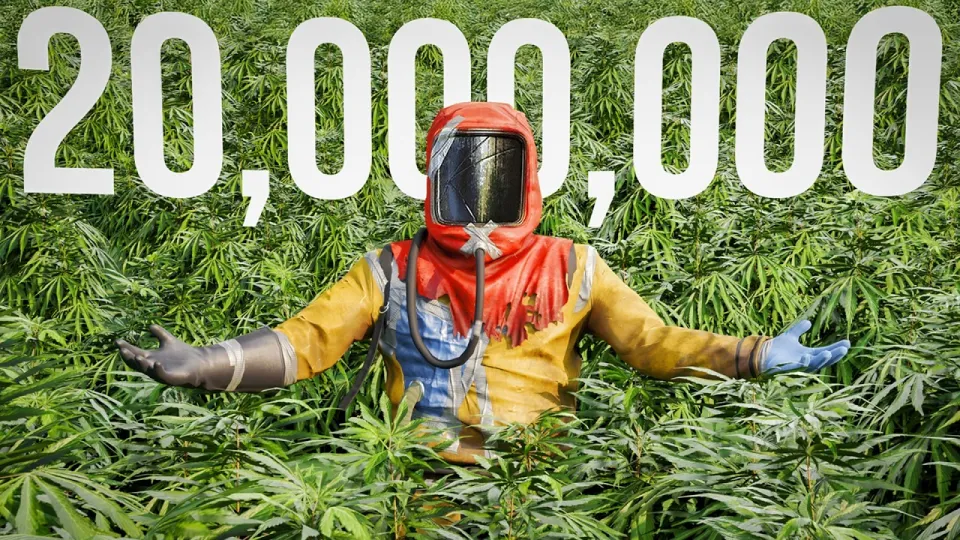
Video: I Became Rust's #1 Farmer...
You can order the same kind of articles for your own video to boost it on YouTube and Google. Just message the Telegram bot @sat_sit_bot. It writes articles around your video, embeds the video and publishes them on popular niche websites (no ads). Try it free: 50 articles on us.
· based on the channel JTeles
Rust farming at scale is a numbers game, and JTeles set the numbers absurdly high: start a wipe with 126,000 cloth and finish with 20,000,000 cloth in seven days. That is roughly 159 times the starting stockpile, gathered, planted and harvested on a live server where other players can raid everything you build. The attempt to become Rust's #1 farmer is documented in the JTeles video, and the sponsor link in the description — a free War Thunder account with the creator's bonus — is the same one used to fund the run.
What the 126,000 to 20,000,000 cloth challenge actually required
The core of the challenge is that cloth in Rust does not scale linearly with effort unless you industrialize it. A single player picking hemp by hand tops out fast; a farm that produces millions of cloth needs planters, water, light, fertilizer and a base large enough to hold all of it. JTeles' plan was to build the biggest cloth farm the server had seen, which means a compound rather than a base: rows of planter boxes, a watering and lighting setup, storage for raw cloth and seeds, and enough defenses that the whole thing survives a raid window.
The 126,000 starting figure matters because it sets the seed and resource budget. Cloth is not just a score counter in Rust — it converts into low-grade fuel through cloth and animal fat, feeds medical production, and is a core ingredient in clothing and armor crafting. A player holding millions of cloth is effectively holding a crafting economy, which is exactly why the project attracted attention.
How viewers and clanmates were used to scale the farm
Inviting viewers onto the server turned a solo grind into a logistics operation. The pattern is familiar from large Rust projects: the creator handles direction and the high-risk moments, while a rotating group of helpers plants, harvests, moves resources and repairs. That division of labor is what makes a multi-million cloth target feasible inside a single wipe instead of a multi-wipe project.
The most repeated praise in the comments was not about the farming itself but about the defense. Helpers held the compound while JTeles was offline and asleep, which in Rust is when most bases die. Anyone who has run a large farm knows the failure mode: you log off with a full base, and you log back in to a hole in the wall and empty boxes.
Why a giant cloth farm makes enemies on a Rust server
Size is visibility. A compound with hundreds of planters, constant harvesting and heavy traffic shows up on the map, in server chat and in the kill feed, and a large Russian clan reportedly found out what was being attempted and moved to stop it. From that point the project stopped being farming and became a siege: PvP fights over the farm footprint, raids on outer structures, base defense, and alliances formed to keep the operation alive.
This is the standard risk curve for any big Rust build. The bigger the farm, the more it looks like loot, and the more players want to test it. A clan does not need to wipe the whole base to ruin the run — destroying planters, cutting water or stealing stored cloth sets the counter back by days.
The practical side of running a mega farm in Rust
A cloth operation at this scale is an engineering problem more than a shooting problem. The useful checklist looks like this:
- Build the planter hall first and keep it compact — vertical stacking and tight rows cut walking time between harvests.
- Automate water and light so a harvest cycle does not depend on a player being present for every step.
- Separate storage from production: raw cloth, seeds and finished goods in different rooms so one breached wall does not cost everything.
- Keep a second, smaller farm off-site as insurance in case the main compound is raided.
- Schedule defense around offline hours, because that is when the base is most vulnerable.
One detail viewers noticed is that the finished compound was so large that simply looking at it caused visible server lag. That is a real constraint on oversized builds: past a certain point, the farm becomes a performance problem for everyone on the server, including its owner.
Questions and doubts viewers raised about the run
A recurring theme in the reaction was disbelief at the raw number: 20,000,000 cloth is far beyond what most players ever see in a single wipe, and some readers of the video treated it as pure madness rather than a plan. The answer is that the target only makes sense with a team — solo, the same goal would take dozens of hours of planting and harvesting, which is why some viewers joked about how long an edited version of this run would be.
Others focused on the helpers, calling the clanmates who defended the base the real MVPs, especially during offline hours. A third group compared the grind to legendary farming arcs in Rust content and asked how much of it was actually fun versus obligation. The honest answer from the run itself is that the fun comes from the defense and the chaos, while the planting is repetitive work that only pays off at scale.
All links from the JTeles video
- Free War Thunder bonus for PC and consoles
- War Thunder mobile link
- JTeles Discord
- JTeles on Twitter/X
- JTeles on TikTok
What the cloth farm run proves about Rust farming
Scaling cloth from 126,000 to 20,000,000 in seven days is a team sport, not a solo achievement, and the JTeles experiment shows why: the farm is only as good as the people defending it while you sleep. The project also demonstrates the real cost of oversized builds, from server lag to the attention that invites raids from organized clans. If you want to try something similar, treat defense and storage separation as seriously as planter layout. For the full run, watch the breakdown by JTeles, and if you want to support the channel's projects, grab the free War Thunder bonus through the link.
Key takeaways
- JTeles started the wipe with 126,000 cloth and set a target of 20,000,000 cloth before the wipe ended.
- The goal had a seven-day window, with viewers invited onto the server to help build and defend the farm.
- A large Russian clan learned about the project and tried to stop it, producing PvP, raids and base defense.
- The finished compound was big enough that rendering it visibly lagged the server.
- Clanmates kept defending the base while JTeles was offline, which viewers singled out as the run's real MVP moment.
Questions & answers
How much cloth did JTeles actually need to reach the goal?
The run started at 126,000 cloth and targeted 20,000,000 by the end of a single seven-day wipe. That is about 159 times the starting amount, which requires an industrial planter setup and a team rather than hand-picking hemp.
Why did a clan attack the cloth farm?
A farm of that size is impossible to hide: it shows up on the map, in server traffic and in the kill feed. According to the video, a large Russian clan learned about the attempt and tried to stop it, which turned the project into raids, PvP and base defense.
Can one player build a 20,000,000 cloth farm alone?
In practice, no — not inside one wipe. Solo farming is limited by planting and harvesting time, so the run relied on viewers and clanmates who farmed, moved resources and defended the compound while JTeles was offline.
What problems come with a farm that large?
Two main ones. First, performance: the finished compound was big enough to visibly lag the server when rendered. Second, security: a huge base full of cloth is prime raid target, so storage separation and offline defense become essential.
Source: I Became Rust's #1 Farmer... · Markdown version